If your gums bleed when you brush, look red or puffy, or feel tender to the touch, you may have gingivitis. It is the earliest stage of gum disease—and the good news is that it is completely reversible.
Dental cleaning for gingivitis is one of the most effective treatments available. In many cases, a professional cleaning combined with better home care is all it takes to bring the gums back to full health.
Understanding why it works — and what happens if you do not act — helps you make the right decision for your smile.
What Is Gingivitis?
Gingivitis is inflammation of the gum tissue. It happens when plaque — a sticky layer of bacteria — builds up along the gumline and is not fully removed through regular brushing and flossing.
The bacteria in plaque irritate the gum tissue, causing it to become:
- Red or darker than its normal pale pink colour
- Swollen or puffy around the base of the teeth
- Tender or sore when touched
- Prone to bleeding during brushing or flossing
Gingivitis is very common. But just because it is common does not mean it should be ignored. Left untreated, it progresses into periodontitis—a more serious form of gum disease that causes permanent damage to the bone and tissue supporting the teeth.
Can a Dental Cleaning Reverse Gingivitis?
Yes — and this is one of the most encouraging truths in dental health.
Can a dental cleaning reverse gingivitis? Absolutely, when it is caught at this early stage. Here is why professional cleaning works when brushing alone does not.
Plaque hardens into tartar — also called calculus — within 24 to 72 hours of forming. Once it hardens, no toothbrush or floss can remove it. Tartar sits along and beneath the gumline, continuously irritating the tissue and feeding the bacterial environment that causes gingivitis.
A professional cleaning removes all of this hardened tartar completely. Once the irritant is gone, the gums can begin to heal. Most patients see significant improvement within just a few weeks of a thorough cleaning combined with better home care habits.
Dental hygiene and cleaning in Jacksonville performed by a trained hygienist go far beyond what home care can achieve — and for patients with gingivitis, it is often the turning point that reverses the condition entirely.
What Happens During a Cleaning for Gingivitis?
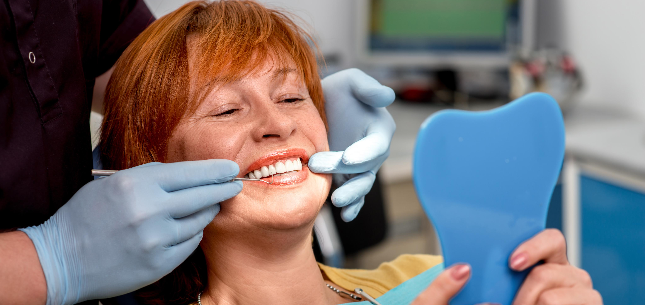
A professional cleaning for gingivitis involves more than a standard polish. Here is what your hygienist does:
- Scaling — using specialized instruments to remove tartar and hardened plaque from above and below the gumline
- Root planing — if needed, smoothing the root surfaces to discourage bacteria from reattaching
- Polishing — removing surface stains and smoothing the enamel surface
- Irrigation — flushing the gum pockets with antibacterial solution to reduce bacterial load
- Assessment — measuring pocket depths and checking for signs of progression beyond gingivitis
For mild to moderate gingivitis, a standard professional cleaning is often sufficient. For more advanced cases, a deeper cleaning called scaling and root planing may be recommended.
A trusted dental office in Jacksonville will assess the severity of your gingivitis and recommend the most appropriate cleaning approach before beginning any treatment.
What Should You Do at Home After a Cleaning?
Professional cleaning does the heavy lifting — but what you do at home every day determines how well your gums stay healthy afterward.
The habits that matter most:
- Brush for two full minutes twice a day using a soft-bristled toothbrush — angle the brush slightly toward the gumline to clean below it
- Floss every single day—this is the step most people skip, and the most important one for gum health because it removes plaque from between teeth where brushing cannot reach
- Use an antibacterial mouthwash to reduce bacteria along the gumline between cleanings
- Stay hydrated—saliva is your mouth’s natural defence system against bacteria
- Replace your toothbrush every three months or sooner if the bristles are worn
These habits do not reverse gingivitis on their own once tartar has formed, but they are essential for preventing it from coming back after your professional cleaning.
How Long Does It Take for Gingivitis to Improve After a Cleaning?
Most patients notice a difference within one to two weeks of a professional cleaning combined with consistent home care.
Here is a general timeline:
| Timeframe | What to Expect |
| First few days | Gums may feel slightly tender as healing begins |
| One week | Redness and swelling begin to reduce noticeably |
| Two weeks | Bleeding during brushing typically decreases significantly |
| One month | Gums should look and feel considerably healthier |
| Ongoing | Regular cleanings and home care maintain results |
If bleeding and swelling do not improve within two to three weeks of a cleaning and improved home care, contact a dental office near you for a follow-up assessment. In some cases, gingivitis has progressed further than expected and may require a deeper treatment approach.
Heal Your Gums With the Right Care — Phelan and Bell Family Dentistry Is Here for You
Gingivitis is one of the most treatable conditions in dentistry—but only when it is addressed before it has a chance to progress. A professional cleaning, combined with consistent daily habits at home, is almost all most patients need to bring their gums back to full health.
At Phelan and Bell Family Dentistry, our goal is to make sure each patient has an experience that is thorough, gentle, and truly custom. Did you spot an early symptom of gingivitis recently, or do you have any other questions regarding gum health? If so, it’s time to book an appointment!
Frequently Asked Questions
Q1: How quickly can gum disease be corrected through a professional cleaning?
Many patients see a significant reduction in bleeding, swelling, and redness in just one to two weeks following a professional dental cleaning with a diligent daily home-care regimen of brushing and flossing.
Q2: Can I reverse gingivitis just by brushing and flossing more at home?
Improved home care is essential — but once plaque has hardened into tartar, only a professional cleaning can remove it. Both professional care and home care are needed together for the best results.
Q3: How often should I get a professional cleaning if I have gingivitis?
Many dentists recommend more frequent cleanings — every three to four months rather than every six — for patients with active gingivitis until the condition is fully under control and stable.
Q4: What if gingivitis goes untreated?
If left alone, gingivitis can result in an advanced version of gum disease called periodontitis, which can cause irreparable damage to bone and tissues that support the teeth and may end in a total loss of your teeth if treatment is not pursued with professional medical attention.